


This quiz tests your knowledge of the Attirampakkam archaeological site in Tamil Nadu, India, a key location for understanding early human occupation in South Asia. All answers have been fact-checked for accuracy based on peer-reviewed studies, such as Pappu et al. (2011) and Akhilesh et al. (2018).
Attirampakkam Stone-Age Quiz | Acheulean & Early Humans
Q1. Attirampakkam is located on which South Indian river’s floodplain?
A. Krishna
B. Palar
C. Godavari
D. Kaveri
Answer: B. Palar
Q2. The oldest Acheulean tools at Attirampakkam date back to roughly how many years ago?
A. 65,000
B. 385,000
C. 150,000
D. 1.5 million
Answer: D. 1.5 million
Q3. Which dating method was primarily used to establish the age of Attirampakkam’s earliest tools?
A. Radiocarbon
B. Optically Stimulated Luminescence (OSL)
C. Cosmogenic Nuclide Dating
D. Dendrochronology
Answer: C. Cosmogenic Nuclide Dating
Q4. Which hominin species is most likely linked to the earliest tools at Attirampakkam?
A. Homo habilis
B. Homo erectus
C. Homo sapiens
D. Homo neanderthalensis
Answer: B. Homo erectus
Q5. The principal raw material for tools at Attirampakkam is:
A. Obsidian
B. Quartzite
C. Basalt
D. Chert
Answer: B. Quartzite
Q6. The Attirampakkam excavation is primarily led by which institution or group?
A. Archaeological Survey of India (ASI)
B. IIT Madras
C. Sharma Centre for Heritage Education
D. TIFR
Answer: C. Sharma Centre for Heritage Education
Q7. Which advanced flaking technology is observed in Attirampakkam’s Middle Paleolithic layers?
A. Pressure flaking
B. Levallois technique
C. Microlithic backing
D. Bladelet production
Answer: B. Levallois technique
Q8. Around 200 kyr ago, intensified occupation at Attirampakkam corresponds to which climatic phase?
A. Last Glacial Maximum
B. Marine Isotope Stage 7
C. Younger Dryas
D. Holocene Optimum
Answer: B. Marine Isotope Stage 7
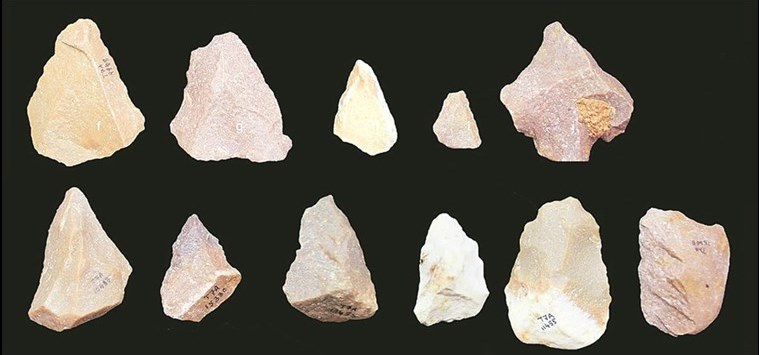
Q9. What type of stone tools dominate the Attirampakkam Acheulean assemblage?
A. Handaxes & cleavers
B. Microliths
C. Celts
D. Blade cores
Answer: A. Handaxes & cleavers
Q10. Geographically, Attirampakkam is found in which modern Indian state?
A. Karnataka
B. Kerala
C. Tamil Nadu
D. Andhra Pradesh
Answer: C. Tamil Nadu
Q11. Attirampakkam is significant for its discovery of what type of archaeological remains?
A. Neolithic pottery
B. Acheulean and Middle Paleolithic stone tools
C. Megalithic tombs
D. Iron Age weapons
Answer: B. Acheulean and Middle Paleolithic stone tools
Q12. The earliest evidence of controlled use of fire in India is associated with:
A. Attirampakkam
B. Bhimbetka
C. Belan Valley
D. Riw?z
Answer: B. Bhimbetka
Q13. The stone tools discovered at Attirampakkam belong predominantly to which industry?
A. Acheulean
B. Oldowan
C. Mousterian
D. Neolithic polished tools
Answer: A. Acheulean
Q14. The artifacts at Attirampakkam date back approximately:
A. 200,000 years
B. 1.5 million years
C. 10,000 years
D. 5,000 years
Answer: B. 1.5 million years
Q15. The discovery of microblade tools at Attirampakkam suggests early human activity involved:
A. Bone crafting
B. Precise tool manufacturing and possibly early hunting
C. Pottery making
D. Metalworking
Answer: B. Precise tool manufacturing and possibly early hunting
Q16. The significance of Attirampakkam’s findings lies in its evidence of:
A. The earliest Indian use of domesticated animals
B. The earliest known prehistoric occupation in South India
C. The first Indian copper tools
D. The earliest Iron Age settlements
Answer: B. The earliest known prehistoric occupation in South India
Q17. The artifacts discovered at Attirampakkam are primarily from which prehistoric period?
A. Mesolithic
B. Paleolithic
C. Neolithic
D. Chalcolithic
Answer: B. Paleolithic
Q18. Which aspect of Attirampakkam’s archaeological finds demonstrates early human adaptation?
A. Diverse stone tool types across Acheulean and Middle Paleolithic periods
B. Development of complex language
C. Construction of permanent homes
D. Domestication of animals
Answer: A. Diverse stone tool types across Acheulean and Middle Paleolithic periods
Q19. The stratigraphy of Attirampakkam reveals layers associated with:
A. Later historic periods
B. Early human technological evolution from Acheulean to Middle Paleolithic tools
C. The development of agriculture
D. Iron and bronze ages
Answer: B. Early human technological evolution from Acheulean to Middle Paleolithic tools
Q20. What environmental feature likely influenced the choice of Attirampakkam as a site for early human occupation?
A. Proximity to a volcanic crater
B. Access to quartzite-rich riverbeds
C. Dense forest cover
D. High-altitude plateau
Answer: B. Access to quartzite-rich riverbeds
Q21. Which tool type is NOT commonly associated with Attirampakkam’s Acheulean layers?
A. Handaxes
B. Cleavers
C. Microliths
D. Bifaces
Answer: C. Microliths
Q22. What is the approximate time range for the Middle Paleolithic tools at Attirampakkam?
A. 1.5 million to 1 million years ago
B. 385,000 to 172,000 years ago
C. 10,000 to 5,000 years ago
D. 65,000 to 50,000 years ago
Answer: B. 385,000 to 172,000 years ago
Q23. Which researcher is prominently associated with the Attirampakkam excavations?
A. Shanti Pappu
B. V.N. Misra
C. R.S. Sharma
D. B.B. Lal
Answer: A. Shanti Pappu
Q24. The Attirampakkam site provides evidence of interaction with which type of landscape?
A. Coastal marine environment
B. Alluvial floodplain
C. Desert dunes
D. Mountainous terrain
Answer: B. Alluvial floodplain
Q25. What makes Attirampakkam’s Acheulean tools significant in a global context?
A. They are the earliest known use of metal tools
B. They represent some of the oldest Acheulean tools outside Africa
C. They indicate early agricultural practices
D. They are linked to Neanderthal migrations
Answer: B. They represent some of the oldest Acheulean tools outside Africa