


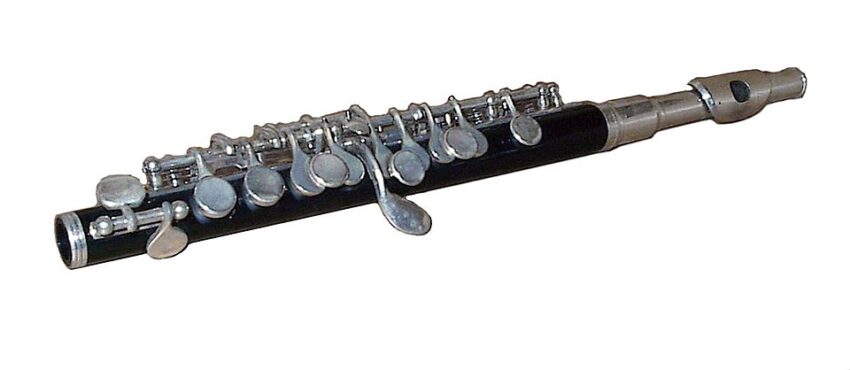
Q1. What does the name “piccolo” mean in Italian?
A. High flute
B. Small
C. Octave flute
D. Military flute
Answer: B. Small
Q2. The modern piccolo sounds how many octaves higher than written music?
A. Two octaves
B. The same pitch
C. One octave
D. Half an octave
Answer: C. One octave
Q3. Which family of musical instruments does the piccolo belong to?
A. Woodwind
B. String
C. Brass
D. Percussion
Answer: A. Woodwind
Q4. What is the standard pitch key of most modern piccolos?
A. D?
B. B?
C. C
D. E?
Answer: C. C
Q5. The piccolo is approximately what fraction of the length of a standard concert flute?
A. Half
B. One-third
C. One-quarter
D. Two-thirds
Answer: A. Half
Q6. Which bore shape is most common in professional wooden piccolos?
A. Fully cylindrical
B. Conical body with cylindrical headjoint
C. Fully conical
D. Cylindrical body with conical headjoint
Answer: B. Conical body with cylindrical headjoint
Q7. Historically, early piccolos were often used in what context before becoming common in orchestras?
A. Jazz ensembles
B. Chamber music
C. Military settings
D. Opera houses exclusively
Answer: C. Military settings
Q8. Who invented the key mechanism that became standard on modern piccolos and flutes?
A. Johann Joachim Quantz
B. Antonio Vivaldi
C. Jean-Pierre Rampal
D. Theobald Boehm
Answer: D. Theobald Boehm
Q9. In an orchestra, the piccolo is often used to:
A. Double the bass lines
B. Add brilliance by doubling violins or flutes an octave higher
C. Provide harmonic foundation
D. Play solo melodies exclusively
Answer: B. Add brilliance by doubling violins or flutes an octave higher
Q10. What is the written lowest note on a standard modern piccolo?
A. C4
B. E4
C. D4
D. G4
Answer: C. D4
Q11. Which material is commonly used for professional orchestral piccolos to produce a warm, rich tone?
A. Plastic
B. Nickel silver
C. Brass
D. Grenadilla wood
Answer: D. Grenadilla wood
Q12. The piccolo should not be confused with which similar instrument that has a cylindrical bore and more strident sound?
A. Flute
B. Recorder
C. Fife
D. Oboe
Answer: C. Fife
Q13. Which composer is credited with first using the piccolo prominently in symphonic music, such as in Symphony No. 5?
A. Wolfgang Amadeus Mozart
B. Ludwig van Beethoven
C. Johann Sebastian Bach
D. Gioachino Rossini
Answer: B. Ludwig van Beethoven
Q14. In John Philip Sousa’s “The Stars and Stripes Forever,” the famous solo was originally written for which type of piccolo?
A. C piccolo
B. Plastic piccolo
C. Wooden piccolo
D. Db piccolo
Answer: D. Db piccolo
Q15. Which Baroque composer wrote concertos often performed on piccolo today, such as RV 443?
A. George Frideric Handel
B. Jean-Philippe Rameau
C. Antonio Vivaldi
D. Johann Sebastian Bach
Answer: C. Antonio Vivaldi
Q16. The embouchure for piccolo typically requires:
A. A looser lip position than the flute
B. The same exact positioning as the flute
C. No lip coverage of the embouchure hole
D. A smaller aperture and firmer lips than the flute
Answer: D. A smaller aperture and firmer lips than the flute
Q17. Why does the piccolo require a faster, more focused air stream than the concert flute?
A. Larger embouchure hole
B. Smaller size and higher pitch
C. Heavier keys
D. Conical headjoint only
Answer: B. Smaller size and higher pitch
Q18. Which feature, common on modern piccolos, helps improve the response of high E?
A. Gizmo key
B. Split-E mechanism
C. Bb thumb lever
D. C# trill key
Answer: B. Split-E mechanism
Q19. In orchestral playing, the piccolo player is often the same musician as:
A. The principal oboist
B. The bassoonist
C. The third flutist
D. The clarinetist
Answer: C. The third flutist
Q20. Which Romantic composer extensively used the piccolo for dramatic effects, such as storm scenes?
A. Johannes Brahms
B. Richard Strauss
C. Franz Schubert
D. Felix Mendelssohn
Answer: B. Richard Strauss
Q21. The headjoint of most piccolos is typically:
A. Conical
B. Cylindrical
C. Square
D. Flared like a trumpet
Answer: B. Cylindrical
Q22. Which 20th-century composer wrote a prominent concerto for piccolo and orchestra, a staple of modern repertoire?
A. Igor Stravinsky
B. Dmitri Shostakovich
C. Lowell Liebermann
D. Sergei Prokofiev
Answer: C. Lowell Liebermann
Q23. Plastic or resin piccolos are particularly suitable for:
A. Outdoor marching bands due to durability
B. Professional orchestral solos
C. Exclusive studio recording
D. Baroque music performance
Answer: A. Outdoor marching bands due to durability
Q24. The piccolo’s fingerings are:
A. Completely different from the flute
B. Identical to the flute but transposed
C. The same as the flute
D. Based on clarinet fingerings
Answer: C. The same as the flute
Q25. Which opera by Rossini features prominent piccolo in the overture?
A. The Barber of Seville
B. Semiramide
C. La Cenerentola
D. William Tell
Answer: B. Semiramide