


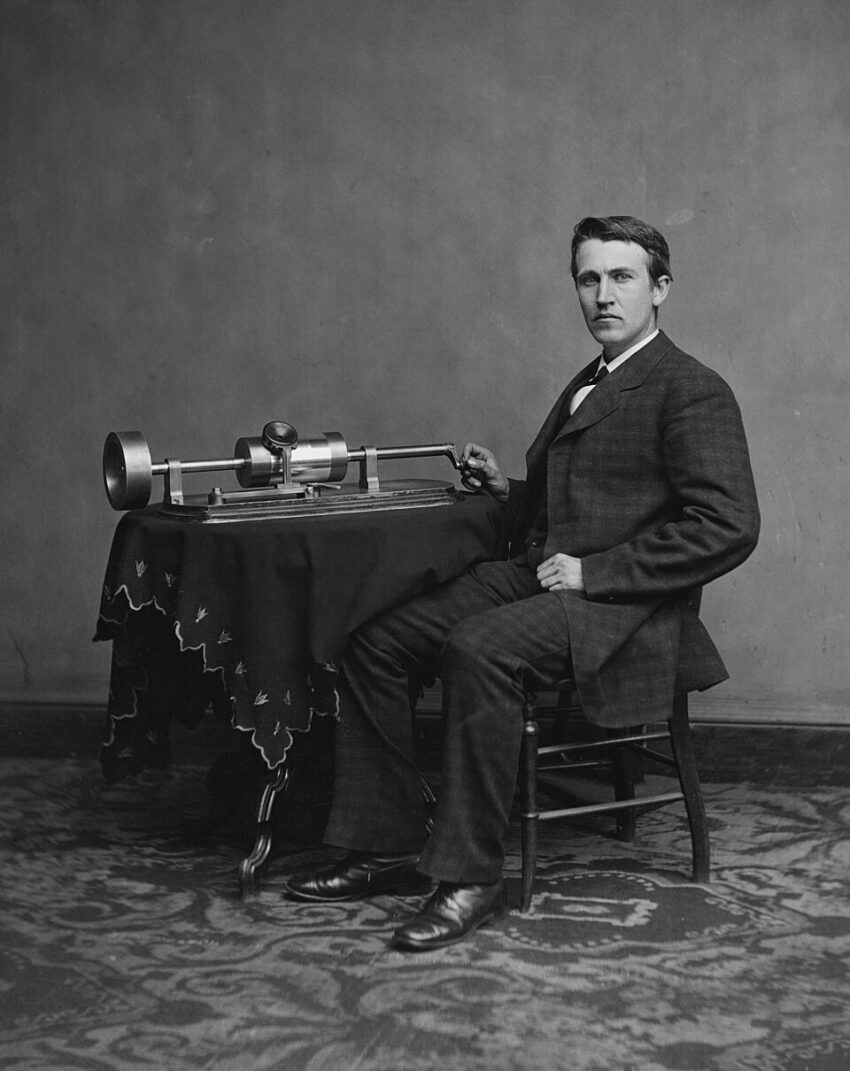
Q1. Who is credited with inventing the phonograph?
A. Alexander Graham Bell
B. Emile Berliner
C. Thomas Edison
D. Edouard-Leon Scott de Martinville
Answer: C. Thomas Edison
Q2. In what year was the phonograph invented by Thomas Edison?
A. 1877
B. 1880
C. 1887
D. 1890
Answer: A. 1877
Q3. What was the recording medium used in Edison’s original phonograph?
A. Wax cylinder
B. Flat disc
C. Tinfoil wrapped around a cylinder
D. Shellac disc
Answer: C. Tinfoil wrapped around a cylinder
Q4. What famous nursery rhyme did Thomas Edison recite as the first test recording on his phonograph?
A. Twinkle Twinkle Little Star
B. Mary Had a Little Lamb
C. Humpty Dumpty
D. Jack and Jill
Answer: B. Mary Had a Little Lamb
Q5. The phonograph was initially developed as a byproduct of Edison’s work on which two inventions?
A. Light bulb and motion picture
B. Radio and microphone
C. Telegraph and telephone
D. Gramophone and graphophone
Answer: C. Telegraph and telephone
Q6. What key improvement did Alexander Graham Bell’s Volta Laboratory introduce to the phonograph in the 1880s?
A. Flat disc records
B. 78 rpm speed standardization
C. Electric amplification
D. Wax-coated cardboard cylinders and a cutting stylus
Answer: D. Wax-coated cardboard cylinders and a cutting stylus
Q7. Emile Berliner invented which device that used flat discs instead of cylinders?
A. Phonograph
B. Gramophone
C. Graphophone
D. Victrola
Answer: B. Gramophone
Q8. What is the primary difference between a phonograph and a gramophone?
A. Phonograph uses cylinders; gramophone uses flat discs
B. Phonograph uses discs; gramophone uses cylinders
C. Phonograph is electric; gramophone is acoustic
D. Phonograph records sound; gramophone only plays back
Answer: A. Phonograph uses cylinders; gramophone uses flat discs
Q9. In early acoustic phonographs, how was sound amplified during playback?
A. Through electric speakers
B. Using vacuum tubes
C. Via a flaring horn
D. With magnetic pickups
Answer: C. Via a flaring horn
Q10. What component in a phonograph vibrates to produce or capture sound waves?
A. Stylus
B. Horn
C. Turntable
D. Diaphragm
Answer: D. Diaphragm
Q11. The stylus in a phonograph is responsible for what primary function?
A. Amplifying sound
B. Rotating the record
C. Tracing or engraving grooves
D. Powering the motor
Answer: C. Tracing or engraving grooves
Q12. In Edison’s early cylinder phonographs, the groove type was known as what?
A. Lateral (side-to-side)
B. Vertical (hill-and-dale)
C. Spiral only
D. Circular
Answer: B. Vertical (hill-and-dale)
Q13. What material replaced tinfoil in improved cylinder phonographs?
A. Shellac
B. Vinyl
C. Wax
D. Rubber
Answer: C. Wax
Q14. Which company was established to exploit Edison’s phonograph commercially in 1878?
A. Victor Talking Machine Company
B. Edison Speaking Phonograph Company
C. Columbia Records
D. Gramophone Company
Answer: B. Edison Speaking Phonograph Company
Q15. What was a major limitation of early tinfoil phonograph recordings?
A. They could only play for a few seconds
B. They required electricity
C. They deteriorated after a few playbacks
D. They were too loud
Answer: C. They deteriorated after a few playbacks
Q16. The transition from cylinders to discs in the early 20th century was primarily driven by what advantage?
A. Easier mass production and storage
B. Better sound quality
C. Longer playing time
D. Electric playback
Answer: A. Easier mass production and storage
Q17. What speed became standard for shellac disc records in the early 20th century?
A. 33 rpm
B. 45 rpm
C. 78 rpm
D. 16 rpm
Answer: C. 78 rpm
Q18. When were long-playing (LP) vinyl records at 33 rpm introduced?
A. 1920s
B. 1948s
C. 1950s
D. 1960s
Answer: B. 1948
Q19. What material became standard for records after the 1940s, replacing shellac?
A. Polyvinyl chloride (vinyl)
B. Wax
C. Celluloid
D. Rubber
Answer: A. Polyvinyl chloride (vinyl)
Q20. The 45 rpm single record format was introduced by which company?
A. Columbia Records
B. RCA Victor
C. Edison Records
D. Deutsche Grammophon
Answer: B. RCA Victor
Q21. How did the phonograph impact the music industry in its early years?
A. It limited music to live performances
B. It focused only on classical music
C. It ended home music playing
D. It allowed mass distribution of recorded music
Answer: D. It allowed mass distribution of recorded music
Q22. Early phonograph recordings often featured which famous opera singer to boost sales?
A. Luciano Pavarotti
B. Enrico Caruso
C. Maria Callas
D. Placido Domingo
Answer: B. Enrico Caruso
Q23. What cultural shift did the phonograph enable by bringing music into homes?
A. Made music accessible beyond live performances
B. Reduced interest in live concerts
C. Limited music to urban areas
D. Ended folk music traditions
Answer: A. Made music accessible beyond live performances
Q24. In the 21st century, vinyl records have experienced a revival due to what perceived quality?
A. Digital perfection
B. Warmer, analog sound and tactile experience
C. Lower cost
D. Portability
Answer: B. Warmer, analog sound and tactile experience
Q25. Which event since 2008 has significantly promoted vinyl culture?
A. Grammy Awards
B. Coachella Festival
C. MTV Music Awards
D. Record Store Day
Answer: D. Record Store Day