


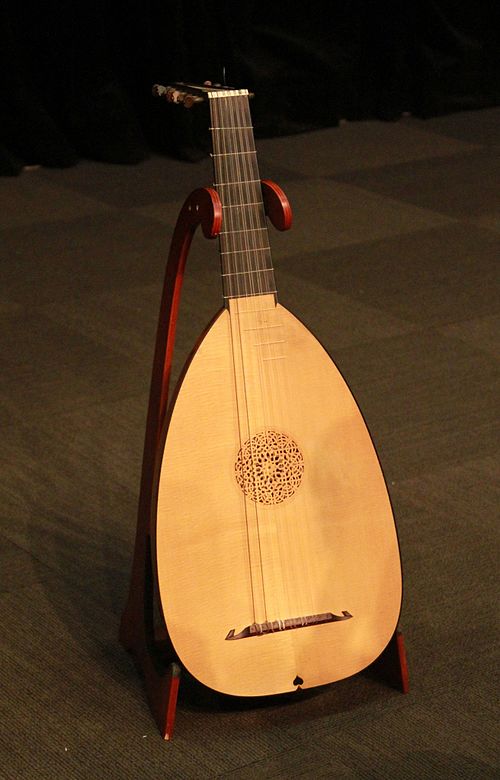
Q1. What is the primary ancestor of the European lute?
A. The Greek lyre
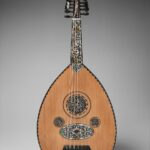
B. The Arabic oud
C. The Indian sitar
D. The Persian tar
Answer: B. The Arabic oud
Q2. During which historical period was the lute the most important instrument for secular music in Europe?
A. Medieval
B. Classical
C. Renaissance
D. Romantic
Answer: C. Renaissance
Q3. How was the medieval lute typically played before the shift to fingerstyle?
A. With fingernails
B. With a plectrum
C. Bowed like a violin
D. Strummed with a pick
Answer: B. With a plectrum
Q4. What major change in playing technique occurred around the 15th century that allowed for more polyphonic music on the lute?
A. Switching to metal strings
B. Adding a sound hole
C. Abandoning the plectrum for finger plucking
D. Extending the neck length
Answer: C. Abandoning the plectrum for finger plucking
Q5. What is a “course” on a lute?
A. A single string
B. The tuning pegs
C. The frets on the neck
D. A pair (or group) of strings tuned in unison or octaves
Answer: D. A pair (or group) of strings tuned in unison or octaves
Q6. What was the standard number of courses on a typical Renaissance lute by the 16th century?
A. 4
B. 5
C. 6
D. 10
Answer: C. 6
Q7. The body of a lute is characteristically constructed from what material and shape?
A. Rounded back from glued ribs of thin wood
B. Flat back made of solid wood
C. Metal resonator
D. Gourd with skin top
Answer: A. Rounded back from glued ribs of thin wood
Q8. What notation system was primarily used for lute music during the Renaissance and Baroque periods?
A. Standard staff notation
B. Tablature
C. Numeric cipher notation
D. Solfege syllables
Answer: B. Tablature
Q9. Which tuning is commonly associated with the Baroque lute, especially in French and German music?
A. Renaissance vielleton (G tuning)
B. Drop D tuning
C. Open C tuning
D. D-minor tuning
Answer: D. D-minor tuning
Q10. What distinguishes the theorbo from a standard lute?
A. Flat back and single strings
B. Extended neck with long unfretted bass strings for continuo
C. No frets and plectrum playing
D. Smaller body for higher pitch
Answer: B. Extended neck with long unfretted bass strings for continuo
Q11. The archlute is primarily characterized by which feature?
A. Re-entrant tuning with octave-lowered top courses
B. Bowed playing style
C. Single stringing throughout
Answer: D. Retention of Renaissance tuning with added long bass strings
Q12. Who is considered one of the greatest English lute composers of the Renaissance, known for melancholic works like “Lachrimae”?
A. Sylvius Leopold Weiss
B. John Dowland
C. Denis Gaultier
D. Johann Sebastian Bach
Answer: B. John Dowland
Q13. Which Baroque composer wrote extensively for the 13-course lute and was a virtuoso performer?
A. John Dowland
B. Francesco da Milano
C. Sylvius Leopold Weiss
D. Luis de Milan
Answer: C. Sylvius Leopold Weiss
Q14. What role did the lute often play in Baroque ensembles?
A. Basso continuo accompaniment
B. Melody lead instrument
C. Percussive rhythm
D. High treble solos only
Answer: A. Basso continuo accompaniment
Q15. Why did the lute decline in popularity by the mid-18th century?
A. Invention of louder keyboard instruments and the guitar
B. Ban by the church
C. Shortage of gut strings
D. Shift to bowed strings only
Answer: A. Invention of louder keyboard instruments and the guitar
Q16. The modern revival of the lute gained momentum in the 20th century thanks to pioneers like whom?
A. Andres Segovia
B. Julian Bream
C. Jimi Hendrix
D. Paco de Lucía
Answer: B. Julian Bream
Q17. What material were lute strings traditionally made from?
A. Steel wire
B. Nylon
C. Sheep or lamb gut
D. Silk
Answer: C. Sheep or lamb gut
Q18. In right-hand technique for Renaissance lute, what is “thumb-under” position?
A. Thumb outside the fingers, like modern guitar
B. Plectrum held by thumb
C. Using only index and middle
D. Thumb inside the hand, parallel to strings
Answer: D. Thumb inside the hand, parallel to strings
Q19. The pegbox on a lute is typically angled how relative to the neck?
A. Straight in line
B. Bent backward
C. Forward like a violin
D. Sideways
Answer: B. Bent backward
Q20. Which Spanish instrument was tuned like the lute but had a guitar-like flat back?
A. Theorbo
B. Cittern
C. Bandora
D. Vihuela de mano
Answer: D. Vihuela de mano
Q21. How many surviving pieces are estimated for the Renaissance lute alone?
A. Around 1,000
B. About 25,000
C. Fewer than 500
D. Over 100,000
Answer: B. About 25,000
Q22. What is “style brisé” associated with lute music?
A. Loud strumming
B. Fast scalar passages
C. Broken or arpeggiated chord style, influential on keyboard
D. Plectrum tremolo
Answer: C. Broken or arpeggiated chord style, influential on keyboard
Q23. The lute’s soundboard often features a decorative carved opening called what?
A. F-hole
B. Bridge hole
C. Sound port
D. Rose
Answer: D. Rose
Q24. Which composer is known for lute works possibly intended for lautenwerck (lute-harpsichord)?
A. John Dowland
B. Vincenzo Capirola
C. Johann Sebastian Bach
D. Ennemond Gaultier
Answer: C. Johann Sebastian Bach
Q25. In modern performances, lutes are often tuned to what pitch standard for historical accuracy?
A. A=440 Hz only
B. Lower pitches like A=415 Hz
C. A=392 Hz exclusively
D. Modern guitar pitch
Answer: B. Lower pitches like A=415 Hz