


Q1. What is the primary origin of the conga drum?
A. West Africa, brought to Cuba via the slave trade
B. Spain, introduced during colonial rule
C. Brazil, from samba traditions
D. Mexico, from mariachi ensembles
Answer: A. West Africa, brought to Cuba via the slave trade
Q2. In Cuba, the conga drum is more traditionally known by what name?
A. Quinto
B. Bongo
C. Tumbadora
D. Atabaque
Answer: C. Tumbadora
Q3. Which material was traditionally used for early conga drum heads?
A. Synthetic plastic
B. Animal skin
C. Goat skin only
D. Wood
Answer: B. Animal skin
Q4. How were traditional conga drums tuned before modern hardware?
A. By heating the head with fire or moistening it
B. Using tuning lugs and screws
C. By adjusting ropes around the shell
D. They were not tunable
Answer: A. By heating the head with fire or moistening it
Q5. Who pioneered the modern screw-and-lug tuning system for congas in the 1950s?
A. Chano Pozo
B. Mongo Santamaria
C. Giovanni Hidalgo
D. Carlos “Patato” Valdes and Candido Camero
Answer: D. Carlos “Patato” Valdes and Candido Camero
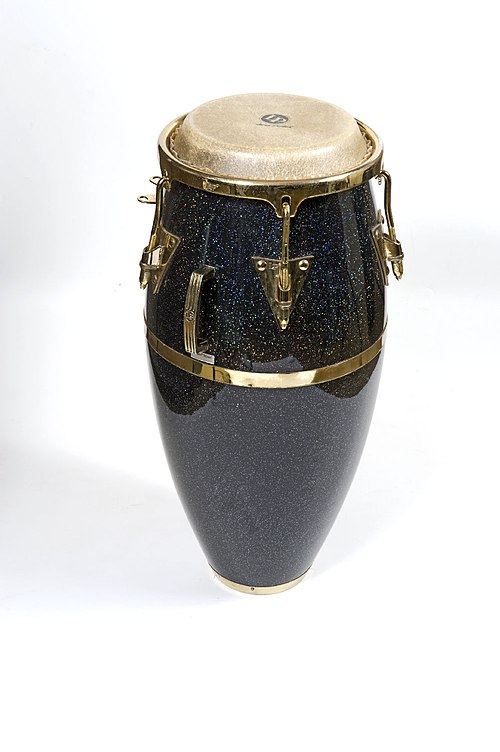
Q6. What is the typical height of a standard conga drum from bottom to head?
A. 50 cm (20 inches)
B. 75 cm (30 inches)
C. 100 cm (40 inches)
D. 120 cm (47 inches)
Answer: B. 75 cm (30 inches)
Q7. Which conga size is the smallest and highest-pitched among the standard three?
A. Supertumba
B. Conga (or tres dos)
C. Tumba (or salidor)
D. Quinto
Answer: D. Quinto
Q8. What is the typical head diameter range for a tumba conga?
A. 12 to 12.5 inches
B. 9 to 10 inches
C. 11 to 11.75 inches
D. 14 inches or larger
Answer: A. 12 to 12.5 inches
Q9. Which basic stroke produces a deep, resonant bass tone on the conga?
A. Open tone
B. Slap
C. Bass tone (played with the full palm in the center)
D. Heel-toe
Answer: C. Bass tone (played with the full palm in the center)
Q10. What is the “open tone” stroke on a conga?
A. Heel pressing without rebound
B. Palm muffling the center
C. Quick slap with cupped hand
D. Fingers striking near the edge, allowing the head to ring freely
Answer: D. Fingers striking near the edge, allowing the head to ring freely
Q11. Which stroke is known for producing a sharp, cracking “pop” sound?
A. Slap
B. Touch/tip
C. Heel
D. Muted tone
Answer: A. Slap
Q12. What is the heel-toe (or manoteo) technique used for?
A. Bending pitch like a glissando
B. Producing high-pitched solos
C. Filling rhythmic subdivisions with alternating heel and toe strikes
D. Muting all sound
Answer: C. Filling rhythmic subdivisions with alternating heel and toe strikes
Q13. Conga drums are most prominently featured in which musical genre?
A. Classical orchestra
B. Afro-Cuban music
C. Rock and roll
D. Bluegrass
Answer: B. Afro-Cuban music
Q14. Which famous conguero popularized multiple conga setups and coordinated independence?
A. Candido Camero
B. Luis Miguel
C. Dizzy Gillespie
D. Herbie Hancock
Answer: A. Candido Camero
Q15. Who is the conguero known for the hit “Watermelon Man” and bridging Latin jazz?
A. Tito Puente
B. Carlos Santana
C. Mongo Santamaria
D. Ray Barretto
Answer: C. Mongo Santamaria
Q16. Which modern conguero is renowned for virtuosic technique and playing up to seven drums?
A. Poncho Sanchez
B. Giovanni Hidalgo
C. Armando Peraza
D. Tata Guines
Answer: B. Giovanni Hidalgo
Q17. What material are many modern conga shells made from, besides wood?
A. Fiberglass
B. Metal
C. Plastic only
D. Bamboo
Answer: A. Fiberglass
Q18. Which manufacturer is famous for the Classic and Galaxy series congas?
A. Vic Firth
B. Remo
C. Zildjian
D. Latin Percussion (LP)
Answer: D. Latin Percussion (LP)
Q19. Gon Bops congas are known for using which wood in premium models?
A. Pine only
B. North American ash
C. Mahogany exclusively
D. Rubber wood
Answer: B. North American ash
Q20. Meinl Percussion congas often feature which innovative hardware?
A. Rope tension
B. No hardware
C. True Skin buffalo heads and comfort rims
D. Nail-tacked heads
Answer: C. True Skin buffalo heads and comfort rims
Q21. How many congas were traditionally played by one drummer in rumba before the 1950s?
A. One
B. Two
C. Three
D. Four or more
Answer: A. One
Q22. What is the requinto conga typically used for?
A. Deep bass only
B. High-pitched solos (smaller than quinto)
C. Mid-range rhythms exclusively
D. As a replacement for bongos
Answer: B. High-pitched solos (smaller than quinto)
Q23. Which stroke involves pressing the elbow or hand to bend pitch?
A. Standard open tone
B. Moose call or glissando
C. Bass only
D. Touch
Answer: B. Moose call or glissando
Q24. In conjuntos playing son cubano, the higher and lower congas are sometimes called:
A. Leader and follower
B. Quinto and tumba
C. Macho and hembra
D. Solo and rhythm
Answer: C. Macho and hembra
Q25. Famous conguero Carlos “Patato” Valdés is credited with:
A. Pioneering tunable hardware in Cuba
B. Inventing the bongos
C. First using fiberglass shells
D. Playing only one drum lifelong
Answer: A. Pioneering tunable hardware in Cuba