


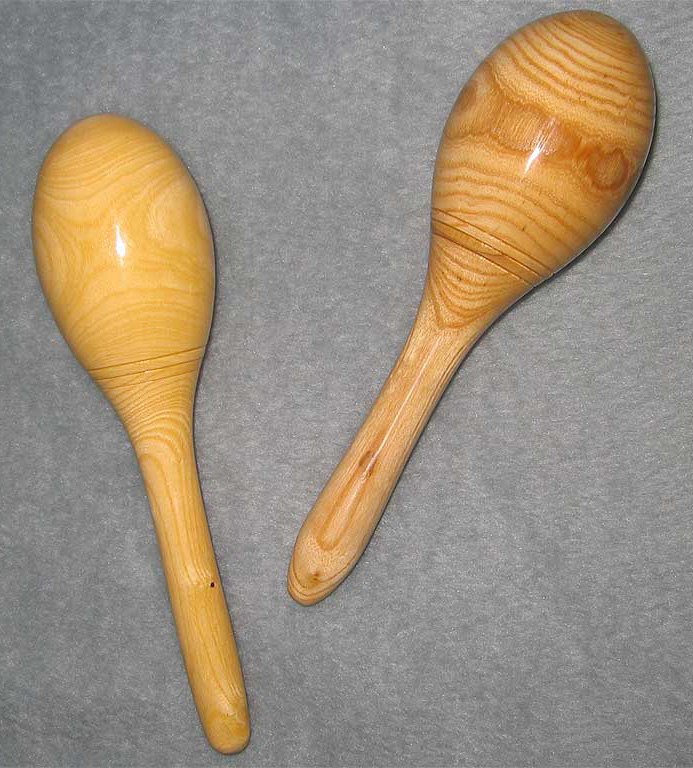
Q1. What is the primary way maracas produce sound?
A. By striking them against a surface
B. By shaking them, causing internal objects to collide with the shell
C. By blowing air through them
D. By plucking strings attached to them
Answer: B. By shaking them, causing internal objects to collide with the shell
Q2. In the Hornbostel-Sachs classification system, maracas are categorized as:
A. Membranophones
B. Chordophones
C. Aerophones
D. Shaken idiophones
Answer: D. Shaken idiophones
Q3. Traditionally, maracas are made from what primary material?
A. Plastic
B. Dried gourds or calabash
C. Metal tubes
D. Bamboo reeds
Answer: B. Dried gourds or calabash
Q4. Maracas are typically played in:
A. Singles, one per performer
B. Large sets like drum kits
C. Trios, with two held in one hand
D. Pairs, one in each hand
Answer: D. Pairs, one in each hand
Q5. What are common fillings inside traditional maracas to create the rattling sound?
A. Seeds, beans, or small pebbles
B. Water or sand only
C. Metal strings
D. Cotton or fabric
Answer: A. Seeds, beans, or small pebbles
Q6. Maracas originated primarily among indigenous peoples of which region?
A. East Asia
B. Latin America and the Caribbean
C. Northern Europe
D. Central Africa exclusively
Answer: B. Latin America and the Caribbean
Q7. In modern manufacturing, maracas are often made from what material for durability?
A. Glass
B. Porcelain
C. Plastic
D. Paper
Answer: C. Plastic
Q8. Which Latin music genre commonly features maracas as a key rhythmic instrument?
A. Tango
B. Salsa
C. Fado
D. Flamenco
Answer: B. Salsa
Q9. The term “maraca” is believed to derive from which language group?
A. Spanish
B. Guarani
C. English
D. French
Answer: B. Guarani
Q10. In Puerto Rican Bomba music, how many maracas are typically used?
A. A pair
B. None
C. One large maraca
D. Three or more
Answer: C. One large maraca
Q11. Which composer included maracas in orchestral works, such as in Romeo and Juliet?
A. Beethoven
B. Sergei Prokofiev
C. Mozart
D. Bach
Answer: B. Sergei Prokofiev
Q12. What role do maracas primarily play in ensembles?
A. Melodic lead
B. Harmonic accompaniment
C. Rhythmic accentuation
D. Bass foundation
Answer: C. Rhythmic accentuation
Q13. Modern plastic maracas are preferred in some contexts because they:
A. Produce no sound
B. Are more durable and consistent in tone
C. Are heavier for louder volume
D. Require no shaking
Answer: B. Are more durable and consistent in tone
Q14. In Cuban son music, maracas are used to:
A. Keep the beat and add rhythmic patterns
B. Provide the main melody
C. Replace the bass line
D. Create harmonic chords
Answer: A. Keep the beat and add rhythmic patterns
Q15. Traditional maracas sometimes used what unusual material for the shell?
A. Turtle shells
B. Cardboard
C. Rubber
D. Fabric
Answer: A. Turtle shells
Q16. Which technique involves rolling the wrist to vary the sound of maracas?
A. Striking
B. Blowing
C. Rolling shake
D. Plucking
Answer: C. Rolling shake
Q17. Maracas are associated with healing rituals among which group?
A. Andean curanderos
B. Scandinavian shamans
C. Australian Aboriginals
D. Japanese monks
Answer: A. Andean curanderos
Q18. In some regions, smaller maracas are called:
A. Guiros
B. Bongos
C. Claves
D. Gapachos
Answer: D. Gapachos
Q19. Famous maraca player Machito (Frank Grillo) contributed to which genres?
A. Classical symphony
B. Salsa and Latin jazz
C. Heavy metal
D. Opera
Answer: B. Salsa and Latin jazz
Q20. The sound of maracas varies based on:
A. Only the handle length
B. Color of the paint
C. Shell material, fillings, and size
D. Player’s height
Answer: C. Shell material, fillings, and size
Q21. In Brazilian pajelança rituals, maracas are used to:
A. Summon spiritual entities
B. Cook food
C. Measure time
D. Light fires
Answer: A. Summon spiritual entities
Q22. Which 20th-century composer used maracas unconventionally as drumsticks?
A. Igor Stravinsky
B. Leonard Bernstein
C. John Cage
D. Philip Glass
Answer: B. Leonard Bernstein
Q23. Maracas belong to which broad family of instruments?
A. String
B. Wind
C. Percussion
D. Keyboard
Answer: C. Percussion
Q24. In Paraguay, traditional maracas are made from:
A. Plastic exclusively
B. Porrongo gourd
C. Aluminum
D. Glass
Answer: B. Porrongo gourd
Q25. A vigorous shake of maracas produces:
A. Softer sounds
B. No sound
C. Melodic tones
D. Louder, driving sounds
Answer: D. Louder, driving sounds