


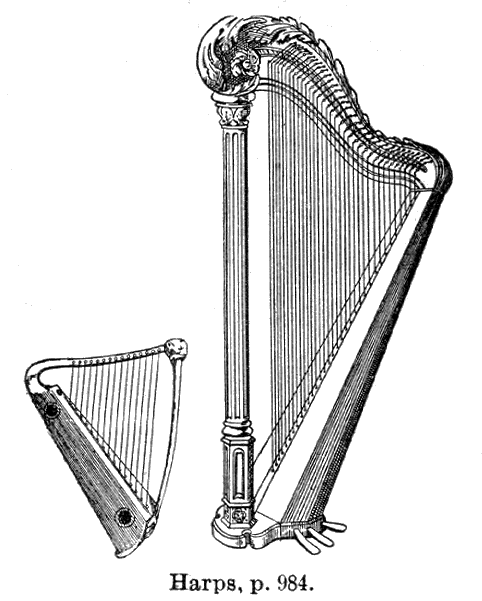
Q1. What is the primary method of producing sound on a harp?
A. Blowing air through it
B. Striking the strings with hammers
C. Plucking the strings with the fingers
D. Bowing the strings
Answer: C. Plucking the strings with the fingers
Q2. The modern concert harp is also commonly known as which of the following?
A. Lever harp
B. Celtic harp
C. Paraguayan harp
D. Pedal harp
Answer: D. Pedal harp
Q3. How many strings does a standard modern concert pedal harp typically have?
A. 34
B. 40
C. 47
D. 52
Answer: C. 47
Q4. On a pedal harp, how many pedals are there to change the pitch of the strings?
A. 4
B. 5
C. 6
D. 7
Answer: D. 7
Q5. What are the colored strings on a concert harp used for?
A. To indicate decorative notes
B. To help identify C (red) and F (black/blue) strings
C. To mark the highest octaves only
D. To differentiate gut from nylon strings
Answer: B. To help identify C (red) and F (black/blue) strings
Q6. The earliest known depictions of harps date back to around which period?
A. Ancient Egypt and Mesopotamia, 3000 BCE
B. Ancient Greece, 500 BCE
C. Medieval Europe, 1000 CE
D. Renaissance Italy, 1500 CE
Answer: A. Ancient Egypt and Mesopotamia, 3000 BCE
Q7. In the Bible, who is described as the “father of all who play the harp and flute”?
A. King David
B. Jubal
C. Moses
D. Solomon
Answer: B. Jubal
Q8. The double-action pedal mechanism for the harp was invented by whom in the early 19th century?
A. Jacob Hochbrucker
B. Sebastien Erard
C. Carlos Salzedo
D. Lyon & Healy
Answer: B. Sebastien Erard
Q9. Which type of harp uses levers near the top of each string to change pitch, rather than pedals?
A. Pedal harp
B. Concert harp
C. Lever harp
D. Cross-strung harp
Answer: C. Lever harp
Q10. The Paraguayan harp is primarily which type of instrument?
A. Chromatic with pedals
B. Diatonic with nylon strings
C. Wire-strung Celtic
D. Electric amplified
Answer: B. Diatonic with nylon strings
Q11. In orchestral music, the harp is particularly known for producing which effect?
A. Sustained drones
B. Percussive beats
C. Rapid glissandi
D. Bowed harmonics
Answer: C. Rapid glissandi
Q12. Famous harpist Carlos Salzedo is credited with revolutionizing which aspect of harp playing?
A. Modern techniques and effects in the 20th century
B. Introducing pedals
C. Wire strings for Celtic music
D. Electric amplification
Answer: A. Modern techniques and effects in the 20th century
Q13. Which composer wrote the famous “Concerto for Flute, Harp, and Orchestra” in C major?
A. Claude Debussy
B. Wolfgang Amadeus Mozart
C. Maurice Ravel
D. Gabriel Fauré
Answer: B. Wolfgang Amadeus Mozart
Q14. The harp became a standard orchestral instrument primarily during which musical era?
A. Baroque
B. Classical
C. Romantic
D. Modern
Answer: C. Romantic
Q15. In harp technique, players typically use how many fingers per hand for plucking?
A. All five, including the pinky
B. Four, excluding the pinky
C. Three, including the thumb
D. Only the thumb and index
Answer: B. Four, excluding the pinky
Q16. The Celtic harp is often associated with which regions?
A. Latin America
B. East Asia
C. Ancient Egypt
D. Ireland, Scotland, and Wales
Answer: D. Ireland, Scotland, and Wales
Q17. Which material is most commonly used for strings on a modern concert pedal harp in the middle range?
A. Steel wire
B. Nylon
C. Gut
D. Silk
Answer: C. Gut
Q18. Famous harp piece “Introduction and Allegro” was composed by whom?
A. Gabriel Pierne
B. Maurice Ravel
C. Reinhold Glière
D. Francois-Adrien Boieldieu
Answer: B. Maurice Ravel
Q19. The triple harp, with three rows of strings, originated in which country?
A. Italy
B. France
C. Wales
D. Paraguay
Answer: A. Italy
Q20. In orchestration, harps are often used to add what to the ensemble?
A. Heavy bass lines
B. Sparkling arpeggios and glissandi for color
C. Loud rhythmic percussion
D. Sustained wind-like drones
Answer: B. Sparkling arpeggios and glissandi for color
Q21. Which biblical figure is famously depicted playing the harp to soothe King Saul?
A. Jubal
B. Solomon
C. King David
D. Daniel
Answer: C. King David
Q22. Modern prominent harp manufacturers include which of the following?
A. Lyon & Healy and Salvi
B. Steinway & Sons
C. Fender
D. Yamaha exclusively
Answer: A. Lyon & Healy and Salvi
Q23. The kora, a bridge-harp with a gourd resonator, is traditionally from which region?
A. South America
B. West Africa
C. Celtic Europe
D. Ancient Mesopotamia
Answer: B. West Africa
Q24. Which effect on the harp involves lightly touching the string at its midpoint to produce a higher harmonic?
A. Glissando
B. Bisbigliando
C. Harmonic
D. Près de la table
Answer: C. Harmonic
Q25. The harp in Paraguay is considered the national instrument and blends which cultural influences?
A. Celtic and African
B. Nordic and Slavic
C. Asian and Middle Eastern
D. European (Spanish) and Guarani indigenous
Answer: D. European (Spanish) and Guarani indigenous